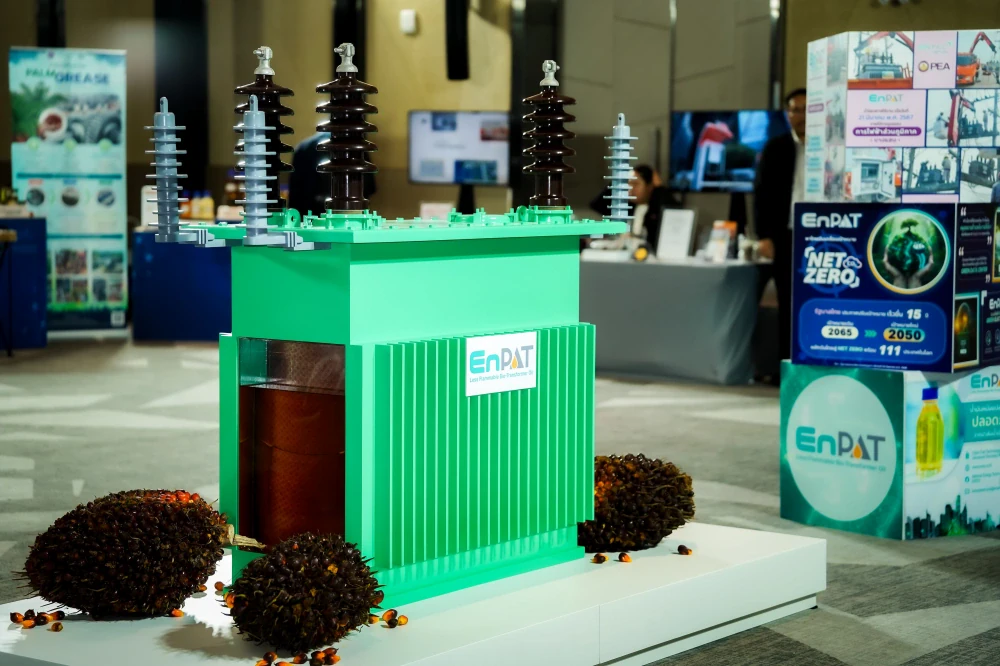
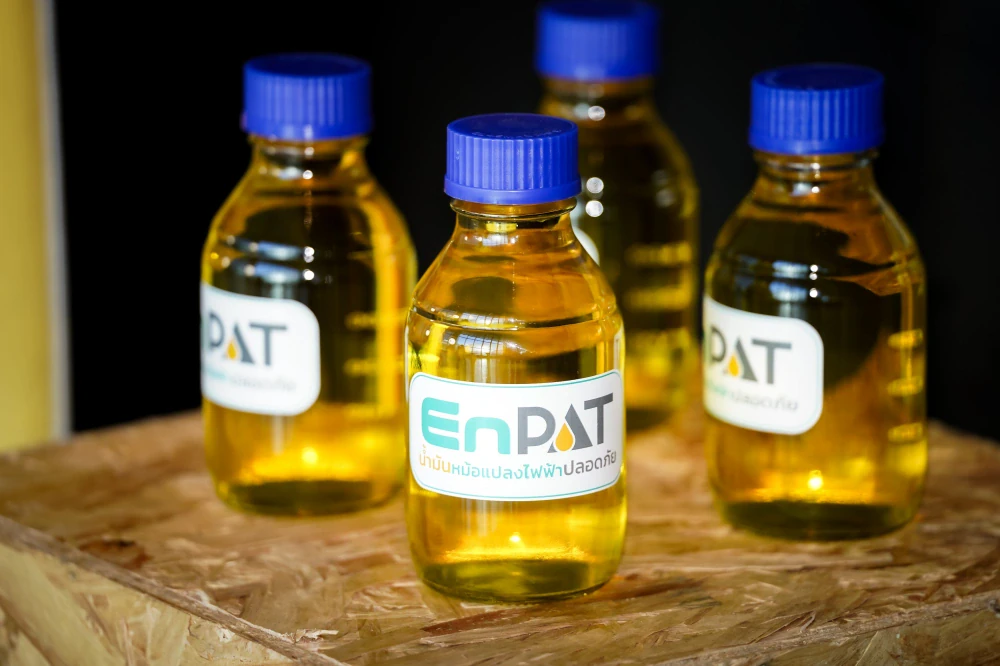
PSP Anticipates Future Energy Trends, Advancing Toward the Era of “Bio-Based, Enhanced Safety, and Low-Carbon” Transformer Oils Strategic collaboration with Thailand’s electricity authorities to promote EnPAT, reduce import dependency, and support the development of new national standards for the country’s power distribution system
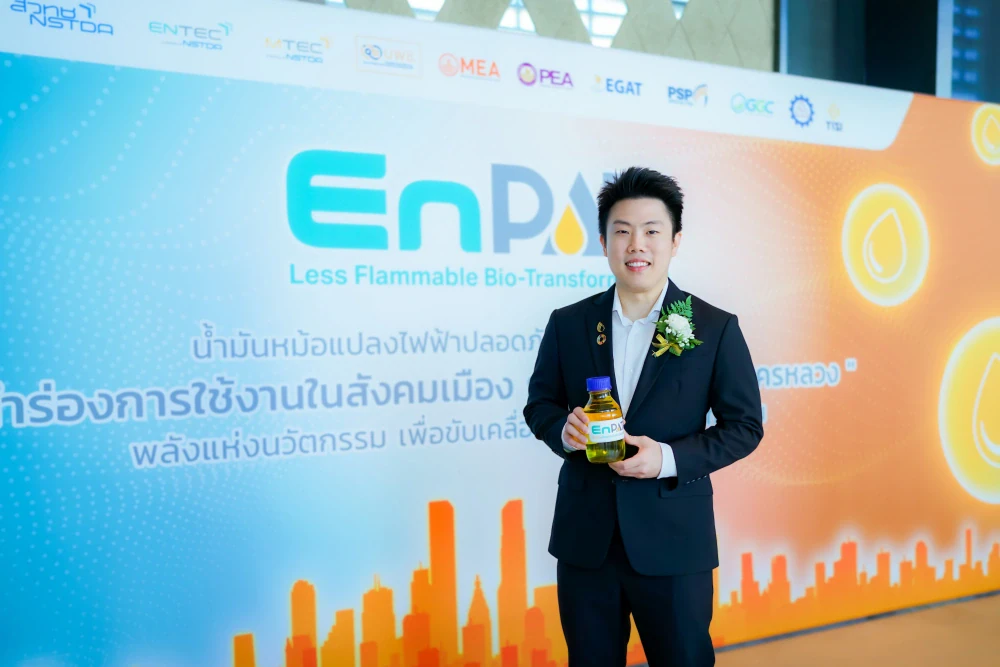
P.S.P. Specialties Public Company Limited (PSP) continues to advance the development and commercialization of “EnPAT,” a bio-based transformer oil derived from Thai palm oil, through strategic collaboration with the Metropolitan Electricity Authority (MEA) and the Provincial Electricity Authority (PEA). The collaboration encompasses research and development funding, as well as structured knowledge and experience transfer, leveraging PSP’s long-standing expertise as a leading provider of transformer oils and lubricant solutions.
This initiative supports Thailand’s transition from conventional mineral-based transformer oils to bio-based alternatives for the national power system, in alignment with global priorities on sustainable infrastructure development and energy transition. It also contributes to reducing Thailand’s reliance on imported base oils and bio-based transformer oils, which currently account for import values of several hundred million baht annually. PSP is reinforcing its role as a key contributor to the advancement of bio-based transformer oil, developed in accordance with internationally recognized production and quality standards, with the objective of enabling large-scale deployment and practical application in the near future.
Mr. Sakesan Krongphanich, Deputy Chief Executive Officer of P.S.P. Specialties Public Company Limited, stated that the global transformer oil industry is undergoing a structural transformation. Historically driven by performance efficiency and cost considerations, the industry is now increasingly focused on safety, environmental responsibility, and greenhouse gas emission reduction to support next-generation energy infrastructure. These requirements are particularly relevant for urban power systems, industrial estates, and data centers, all of which demand high reliability, substantial energy capacity, and significantly reduced operational risk.
Future transformer oils must address three critical dimensions: the use of bio-based raw materials, enhanced fire resistance to improve safety for communities and infrastructure, and measurable carbon reduction across the entire product life cycle. EnPAT represents a tangible outcome of research and development efforts aligned with these strategic imperatives.
“The collaboration with MEA and PEA serves as a critical mechanism for translating innovation into system-level implementation,” Mr. Sakesan explained. “Transformer equipment and insulating oils deployed across the country must comply with electricity authority standards. Pilot implementation within actual power systems is therefore essential in building confidence among all stakeholders, including transformer manufacturers, electricity distributors, regulatory agencies, and the public. Furthermore, such implementation provides an important data foundation for the future development of Thai Industrial Standards (TIS).”
PSP’s role in the EnPAT initiative extends across the entire value chain. The company provides support from upstream to downstream activities, including research and development funding, technical knowledge transfer, and the application of more than three decades of experience in lubricant research, formulation, and industrial-scale manufacturing. PSP also supports performance validation, safety testing, and production readiness under internationally accepted manufacturing and quality standards, ensuring that EnPAT is well positioned for widespread adoption within Thailand’s power infrastructure.
“The transition to bio-based transformer oil should be viewed not merely as the introduction of a new product, but as a comprehensive upgrade of the entire supply chain,” Mr. Sakesan added. “This encompasses raw material sourcing, production processes, operational use, and end-of-life management. EnPAT is aligned with circular economy principles, as more than 97% of used oil can be repurposed as feedstock for biodiesel production, contributing to waste reduction and enhanced resource efficiency within the domestic economy.”
Based on international trade data from recent years, Thailand continues to rely heavily on imports of transformer oils and base lubricants, with annual import values amounting to several hundred million baht. EnPAT, produced from domestically sourced Thai palm oil, represents a strategic domestic alternative that enhances national energy security, mitigates exposure to global price volatility and supply disruptions, and supports value creation within Thailand’s agricultural sector.
Looking ahead, PSP anticipates that the expansion of digital infrastructure and data centers, together with government-led climate and decarbonization policies, will further accelerate demand for transformer oils that meet higher standards of safety and environmental performance. EnPAT is expected to serve as a key enabler in addressing these evolving requirements, while also supporting the long-term development of new standards for Thailand’s power distribution system.
PSP remains committed to working collaboratively with all relevant stakeholders to promote bio-based transformer oil as a mainstream solution for Thailand’s power sector. This initiative represents a significant milestone in advancing the sustainable development of Thailand’s energy industry. In the initial phase, PSP plans to produce bio-based transformer oil to replace approximately 5% of the domestic mineral-based transformer oil market, serving demand from electricity generation and distribution, residential areas, industrial estates, and data center operations, before expanding production to international markets in subsequent phases, Mr. Sakesan concluded.